The law on Cannabis.
Anyone found in possession of cannabis could be liable to a fine or a prison sentence, cannabis is classed as a B category drug in the UK and is illegal...link

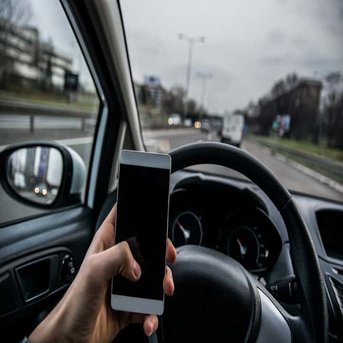
It is illegal to hold and use a mobile phone, sat-nav, tablet or another device capable of sending or receiving data while driving or riding a motorcycle.
The law applies whether the device is being used online or offline and whether or not the driver is making a call.
A driver caught committing the offence will normally receive six penalty points and a £200 fixed penalty. More serious cases can be taken to court, where a larger fine and disqualification may be imposed.
A driver must not hold and use a mobile telephone or similar interactive communication device for any purpose while driving.
Prohibited activity may include:
The device does not have to be connected to a mobile network at the time. Holding it while using a stored function can still amount to the offence.
The prohibition continues to apply where the vehicle is temporarily stationary but remains part of the journey.
This includes when the driver is:
A driver should park safely before holding and using the device.
Stopping on the hard shoulder or in another dangerous or prohibited location merely to use a telephone may create a separate offence.
The standard fixed penalty for holding and using a mobile device while driving is:
If the case goes to court, the penalties can include:
The court may deal with the case rather than issuing a fixed penalty where the circumstances are particularly serious, or the driver faces disqualification under the penalty-points rules.
A driver who receives six or more penalty points within two years of passing their first driving test will normally have their licence revoked by the Driver and Vehicle Licensing Agency.
A newly qualified driver receiving six points for one mobile-phone offence may therefore lose their licence.
Revocation is different from a court-imposed driving ban. To regain a full licence, the driver will normally need to:
The six penalty points remain on the driving record after the licence is regained.
A driver has no legal right to be offered an educational course instead of penalty points or prosecution.
The ordinary sanction for the handheld mobile-phone offence is six points and a £200 fixed penalty, or prosecution in court.
Police forces and prosecutors decide how to deal with individual cases in accordance with the law, evidence and applicable enforcement policy.
A driver should not assume that a clean record, an early admission or brief use of the device will result in a course being offered.
On 1 March 2017, the penalty for using a handheld mobile telephone while driving was increased from:
The increase was intended to recognise the risks caused by distracted driving and to provide a stronger deterrent.
Earlier legislation had been interpreted as focusing on interactive communication functions, such as calls and messages.
The rules were widened in March 2022 so that the offence covers holding and using a device for virtually any purpose.
This removed arguments that activities such as filming, taking photographs, selecting music or accessing stored information fell outside the offence merely because no communication was taking place.
There are limited statutory exceptions.
A driver may use a handheld device to call 999 or 112 in response to a genuine emergency where it is unsafe or impractical to stop.
This exception is narrow. It does not permit ordinary calls merely because the matter feels urgent or stopping would be inconvenient.
A handheld device may be used to make a contactless payment where:
This may apply at locations such as a drive-through restaurant or road-toll terminal.
It does not allow a driver to make a general online payment, transfer money or browse an application while stopped in traffic.
An exception may apply where the device is being used to park the vehicle remotely through an authorised remote-control parking function.
The system must be used in accordance with its design and the driver must remain responsible for safety.
A device may be used hands-free if it can be operated without being held at any point during use.
Examples include:
The device must not obstruct the driver's view of the road or traffic.
Hands-free use is not automatically safe or lawful in every circumstance. A driver may still be prosecuted if the distraction causes poor driving or prevents proper control of the vehicle.
The specific handheld-device offence requires the device to be held during use.
However, interacting with a mounted device can still result in prosecution where it causes distraction or affects the standard of driving.
Possible offences include:
Navigation, music and other settings should be arranged before starting the journey.
The law is not restricted to conventional mobile telephones.
Depending on how it is held and used, the prohibition can cover devices capable of interactive communication, including:
Using a smartwatch or another wearable device can also lead to careless or dangerous-driving allegations if it distracts the driver.
A person supervising a learner driver is treated as subject to the handheld mobile-phone restriction.
The supervisor must remain able to observe the road, give instructions and take appropriate action.
Using a handheld device while supervising can result in the same six points and £200 fixed penalty.
A mobile-phone allegation may be based on:
The prosecution does not necessarily need to recover or examine the telephone if reliable observations or video evidence establish that it was held and used.
Police forces increasingly use roadside cameras and other technology to identify drivers holding telephones.
Images may be reviewed before enforcement action is taken to determine whether an offence appears to have occurred.
Technology can assist detection, but the prosecution must still prove the offence to the required criminal standard if the allegation is contested in court.
Employers should not require or encourage employees to use handheld devices while driving for work.
A workplace driving policy may provide that:
Depending on the circumstances, an employer may face regulatory or civil consequences where unsafe working practices contribute to a collision.
Mobile-phone use can result in a more serious charge where the manner of driving falls below or far below the standard expected of a competent and careful driver.
Relevant factors may include:
Prolonged mobile-phone use is identified as an important culpability factor in serious dangerous-driving cases.
Where distracted driving causes serious injury or death, offences carrying imprisonment may apply.
Causing death by dangerous driving carries a maximum sentence of life imprisonment.
Causing serious injury by dangerous driving carries a maximum sentence of five years' imprisonment.
Causing death by careless driving carries a maximum sentence of five years, while causing serious injury by careless driving carries a maximum of two years.
The driver will also normally face a substantial period of disqualification and may be required to pass an extended driving test.
Merely having a telephone in the vehicle is not an offence.
A disputed case may turn on whether the prosecution can prove that the driver:
Statements such as "I was only moving it" or "I was checking the time" require careful consideration against the legislation and available evidence.
The available defence depends on the facts.
Relevant issues may include:
A driver should not provide a false account or fabricate evidence. Doing so can lead to much more serious criminal charges.
Six points can have serious consequences for drivers who already have points on their licence.
A driver who accumulates 12 or more points within three years will normally face disqualification under the totting-up provisions.
The usual minimum disqualification is:
A court may reduce or avoid a totting-up ban where exceptional hardship is established, but ordinary inconvenience or loss of employment is not automatically sufficient.
If you receive a notice requiring identification of the driver, a fixed penalty or court papers:
Failing to identify the driver can result in a separate offence carrying six penalty points and a substantial fine.
Drivers can reduce the risk by:
Stronger penalties are only one part of prevention. Education, responsible technology, visible enforcement and changing social attitudes are also important.
Use the search facility at the top of this page to find a solicitor experienced in mobile-phone driving offences, penalty points, driving disqualification and serious road traffic prosecutions.
A solicitor can assess the evidence, advise whether an exception or defence applies and explain the likely consequences of accepting a fixed penalty or going to court.
Solicitors.com is not a firm of solicitors. This article provides general information about mobile-phone driving law in England, Wales and Scotland and does not constitute legal advice. Separate rules apply in Northern Ireland, and the outcome of a case will depend on the evidence and individual circumstances.
If you believe this page contains an error or requires updating, please get in touch with us. We welcome amendments that help keep our legal information accurate and useful.



This is a highly specialised area of the Law and covers both aircraft and their facilities as well as many other areas detailed here.
link
As a charity it is important to understand your legal obligations and rights, a Charity Law solicitor swill be able to help with this, find Charity Law Solicitors from Solicitors.com
link
Solicitors.com - if you are looking to take action under the Human Rights Act, understand your rights and how a solicitor can assist you.
link

We have produced a few guides to help you but would recommend that you speak to a solicitor as all situations are different.
link


If you are looking to buy a property abroad you will need expert legal advice, this section details services provided, and offers guidance on how to find a solicitor for your needs.
linkWhat is Double Jeopardy? and is it still Law in the UK?..
linkAnyone found in possession of cannabis could be liable to a fine or a prison sentence, cannabis is classed as a B category drug in the UK and is illegal...link
Police cautions and warnings are the same and can be issued to anyone over the age of ten for minor offences, whilst this does not count as a conviction it can..link
Over 2000 section 60 notices have been issued in London last year, what are they and do they work?..link
Over 2000 section 60 notices have been issued in London last year..
linkThe sex offender register - Guide..link
Laws affecting Drones. - Drones are one of the 'must haves' for many people in the UK, their popularity has soared over recent years (sorry about that pun), and..link
Is it right that a child that is groomed online can face a criminal record...link
Police Chiefs are calling for a change in the 'stop and search' l..
linkChanges in the police stop and search monitoring | Recommendations have been made to improve the way the police record information when undertaking a stop and s..link
Anti-Social Behaviour.
Anti-social behaviour is defined as activities that are unacceptable and reduce the quality of life for others, this could be by harassm..link
Speeding motoring offences
Over 100,000 motorists are caught speeding each year, many have attended speed awareness courses, many were fined and received point..link
Solicitors.com are not a firm of solicitors, and any content on the site should not be used in substitute for obtaining Legal advice from a solicitor regulated in the UK, Solicitors.com recommends that you contact a firm of solicitors to discuss your individual legal requirement. Whilst we strive to bring you accurate up to date content, all content on this site is not legal advice and is not guaranteed to be correct. Use of this site does not create a client relationship.

Step by step guide to help you understand the process of Conveyancing and moving.
link.jpg)
We have put together a few guidance notes for your help with Criminal law matters, if you require a solicitors please use the search facility or ask a question.
link
If you are looking for a commercial solicitor understand your options by contacting one of the 100s of commercial law firms on solicitors.com
link
If you are considering making a claim for Medical Negligence understand your rights and the process, find a medical compensation solicitor via solicitors.com
link
The amount of money owing may dictate the route you take to reclaim your money, we recommend that you discuss your situation with a solicitor, or you can call the CAB on 0808 223 1133.
link
To undertake a dental negligence claim you must have sustained an injury or damage, as a result of the dental treatment understand the options available to you.
link

Family Law Solicitors can help you resolve the problems which may arise in the break-up of relationships, including financial issues and matters concerning any children.
link
Will be able to assist on all areas of Motoring Law for Example Drink Driving, Dangerous Driving, Careless Driving, Totting Up, Speeding, Driving Without Insurance motor offences.
link
Find a solicitor that can assist with wills, probate and estate planning in your area.
link