Pension Earmarking
Pension Earmarking - The government may have inadvertently opened up a loophole that can have a major impact in divorce cases...link

Inheritance Tax is a tax that may be payable on a person's estate when they die. The estate can include their home, savings, investments, business interests, personal possessions and certain gifts made during their lifetime.
Inheritance Tax is not automatically charged on every estate. The amount payable depends on the value of the estate, who inherits it, the available allowances and whether any exemptions or reliefs apply.
The standard Inheritance Tax threshold, known as the nil-rate band, is £325,000.
Where the value of the taxable estate exceeds the available threshold, Inheritance Tax is normally charged at 40% on the excess.
For example, if a taxable estate is worth £500,000 and only the standard £325,000 nil-rate band is available, the potential taxable amount is £175,000.
The £325,000 threshold has remained unchanged since the 2009–2010 tax year and is currently scheduled to remain frozen until at least 5 April 2031.
Spouses and civil partners do not simply receive one joint £650,000 allowance during their lifetimes. Each person has their own £325,000 nil-rate band.
Transfers between spouses or civil partners are normally exempt from Inheritance Tax, subject to special rules where one person is not treated as long-term UK resident.
If the first spouse or civil partner to die does not use all of their nil-rate band, the unused percentage can normally be transferred to the survivor's estate.
This means the surviving spouse or civil partner's estate may have a standard nil-rate band of up to £650,000 when they later die.
An additional allowance may be available where a person leaves a qualifying home, or a share of one, to their direct descendants.
This is known as the residence nil-rate band. The maximum allowance is currently £175,000 per person.
Direct descendants can include:
The residence nil-rate band is not available simply because the estate contains a house. The qualifying residential interest must normally pass to eligible direct descendants.
A married couple or civil partners may potentially pass on up to £1 million without Inheritance Tax where all the relevant conditions are satisfied.
This can consist of:
The £1 million figure is not a general exemption available to every couple. It depends on unused allowances being transferable and a qualifying home passing to direct descendants.
The residence nil-rate band is reduced where the net value of the estate exceeds £2 million.
It is withdrawn by £1 for every £2 by which the estate exceeds that threshold. As a result, sufficiently large estates may receive no residence nil-rate band.
This calculation is based on the value of the estate before deducting certain reliefs, which can produce unexpected results for estates containing businesses or farms.
A residence nil-rate band may still be available where a person sold, downsized or gave up their home after 8 July 2015.
The rules are complex, but a downsizing addition may preserve some or all of the allowance where equivalent assets pass to direct descendants.
Property passing to a spouse or civil partner is normally exempt from Inheritance Tax.
This exemption can apply regardless of the amount transferred. It can therefore defer the Inheritance Tax liability until the death of the surviving spouse or civil partner.
The exemption does not generally apply to unmarried couples, regardless of how long they have lived together or whether they have children.
An unmarried partner may therefore inherit a home or other assets and face an Inheritance Tax liability that would not arise for a spouse or civil partner.
Giving assets away during your lifetime can reduce the value of your estate, but gifts are subject to detailed rules.
Most outright gifts to individuals are known as potentially exempt transfers.
If the person making the gift survives for seven years, the gift will normally fall outside their estate for Inheritance Tax purposes.
If they die within seven years, the gift may use some or all of their available nil-rate band. Tax may be payable where the total value of relevant gifts exceeds the available threshold.
Taper relief can reduce the tax charged on a lifetime gift where the person survives for more than three years but less than seven years after making it.
Taper relief reduces the tax payable on the gift. It does not reduce the value of the gift when calculating how much of the nil-rate band has been used.
This means taper relief will usually matter only where lifetime gifts exceed the available nil-rate band.
A person can normally give away up to £3,000 in each tax year using the annual exemption.
If the previous tax year's exemption was not used, it can usually be carried forward for one tax year only.
Small gifts of up to £250 can normally be made to any number of people each tax year, provided another exemption has not been used for the same person.
Additional exemptions can apply to gifts made in connection with a wedding or civil partnership.
The exempt amount depends on the relationship between the donor and the recipient.
Regular gifts may be exempt where they are made from surplus income rather than capital.
To qualify, the gifts must normally:
This exemption can be valuable, but detailed records should be retained showing income, expenditure and the pattern of gifts.
A gift may remain part of a person's estate where they continue to benefit from the asset after giving it away.
For example, a parent may transfer their home to a child but continue living there rent-free. Although legal ownership has changed, the property may still be treated as part of the parent's estate for Inheritance Tax.
Giving away an asset while continuing to use or control it is therefore not necessarily effective Inheritance Tax planning.
These arrangements may also create Capital Gains Tax, care-fee, benefit and family-dispute risks.
Gifts left to qualifying charities are normally exempt from Inheritance Tax.
The rate of Inheritance Tax on part of an estate can also be reduced from 40% to 36% where at least 10% of the relevant net estate is left to charity.
The calculation can be complicated where an estate is divided into different components, so professional advice may be needed when preparing the will.
At present, many discretionary pension death benefits and unused defined-contribution pension funds can pass outside the deceased's estate for Inheritance Tax purposes.
The Income Tax treatment of inherited pension benefits depends on matters including the deceased's age, the type of payment and when the benefits are paid.
Pensions should not be assumed to be entirely tax-free. Income Tax and other pension rules may still apply even where no Inheritance Tax is payable.
For deaths occurring on or after 6 April 2027, most unused pension funds and pension death benefits will be brought within the value of the deceased's estate for Inheritance Tax purposes.
The changes will apply even where pension trustees or scheme administrators have discretion over who receives the benefit.
The deceased's personal representatives will generally be responsible for reporting the pension value and paying any Inheritance Tax due as part of the administration of the estate.
Death-in-service benefits payable from registered pension schemes will be excluded from the new Inheritance Tax rules.
In some circumstances, inherited pension funds could be affected by both Inheritance Tax and Income Tax.
This may occur where the pension is included in the deceased's estate for Inheritance Tax and the beneficiary is also liable to Income Tax when withdrawing the funds.
The exact treatment will depend on the deceased's age, the form of the death benefit, the beneficiary's tax position and the detailed rules applying from April 2027.
People with significant pension savings should review:
A pension nomination does not replace a will, and a will does not always control the distribution of pension death benefits.
Business Property Relief can reduce the taxable value of qualifying business assets.
Assets that may qualify can include:
Relief is not available for every business. Businesses primarily engaged in investments, securities, land, or buildings may be excluded.
For deaths on or after 6 April 2026, the combined value of qualifying agricultural and business property receiving 100% relief is limited to £2.5 million per person.
< p> A qualifying value above the available £2.5 million allowance generally receives relief at 50%, creating an effective Inheritance Tax rate of up to 20% on that excess.The allowance is shared between qualifying agricultural and business property rather than providing a separate £2.5 million allowance for each.
Special rules apply to trusts, lifetime transfers and the allocation of the allowance between different assets.
Shares designated as not listed on the markets of recognised stock exchanges, including many shares traded on AIM, generally qualify for Business Property Relief at 50% rather than 100%, provided the other qualifying conditions are met.
Investment risk and tax treatment should both be considered before purchasing shares for Inheritance Tax planning.
Agricultural Property Relief can reduce the agricultural value of qualifying farmland, buildings and farmhouses.
The property must meet the detailed ownership, occupation and agricultural-use conditions.
The relief normally applies to agricultural value rather than development or hope value.
Agricultural Property Relief now shares the £2.5 million allowance for 100% relief with Business Property Relief.
Qualifying agricultural and business property above the available allowance normally receives 50% relief.
Inheritance Tax due on qualifying agricultural and business property can generally be paid in equal annual instalments over ten years without interest under the revised rules.
Farm and business owners should review succession plans, ownership structures, partnerships, wills and insurance arrangements in light of these changes.
How a property is owned can affect what passes under a will and how the estate is administered.
Where property is owned as joint tenants, the deceased person's interest normally passes automatically to the surviving owner by survivorship.
It does not usually pass under the will, but its value can still be relevant for Inheritance Tax.
Where property is owned as tenants in common, the deceased person's share normally passes under their will or the intestacy rules.
This form of ownership is sometimes used in estate planning, but changing ownership alone does not automatically reduce Inheritance Tax.
Genuine debts and liabilities can normally be deducted when calculating the value of an estate.
These may include:
Restrictions may apply where a debt was used to acquire excluded property, fund gifts or obtain assets qualifying for a relief.
The executors or administrators are usually responsible for valuing the estate, reporting it to HM Revenue and Customs and paying the tax from estate funds.
Beneficiaries do not normally pay Inheritance Tax personally on assets inherited from the estate.
However, recipients of taxable lifetime gifts may sometimes become responsible for tax attributable to those gifts.
Inheritance Tax is normally due by the end of the sixth month after the month in which the person died.
Interest can be charged on tax paid after the deadline.
Some Inheritance Tax normally has to be paid before the grant of probate can be issued, which can cause difficulty where most of the estate consists of property or other assets that cannot immediately be sold.
Banks may release money directly to HMRC under the Direct Payment Scheme. Executors may also need to arrange lending or pay from personal funds and recover the money from the estate.
Inheritance Tax attributable to certain assets, including some property, businesses and shares, may be paid in annual instalments.
Interest can normally arise on outstanding instalments, although different rules apply to qualifying agricultural and business property under the reforms introduced in April 2026.
The personal representatives must identify and value the deceased's:
Debts, exemptions and reliefs must also be considered.
Where a full Inheritance Tax account is required, it will usually be submitted using form IHT400 and the relevant supporting schedules.
The estate must generally be reported within 12 months of the death, although the payment deadline may arise much earlier.
The rules governing overseas assets changed from 6 April 2025.
Liability for Inheritance Tax is now based mainly on long-term UK residence rather than the previous domicile-based system.
A person may be treated as a long-term UK resident where they have been UK resident for the required number of tax years.
Depending on their residence history, overseas assets may remain within the UK Inheritance Tax net for a period after they leave the UK.
People with international assets, foreign pensions, overseas homes or plans to move abroad should obtain specialist tax advice.
The £1 million figure applies only in particular circumstances, usually involving transferred allowances and a qualifying home passing to direct descendants.
The property may remain within the estate where the person continues living in it or benefiting from it without paying a full market rent.
That may be correct under the present rules, but most unused pension funds and pension death benefits are due to enter estates from 6 April 2027.
< "4 "“My Partner Will Inherit Tax-Free"The spouse exemption does not normally apply to an unmarried partner.
Taper relief may reduce tax on a taxable gift, but it does not reduce the value of the gift or restore the nil-rate band.
Inheritance Tax planning should not be considered in isolation. Giving away too much can leave a person without sufficient funds or control over their home and investments.
A will and estate plan should be reviewed following:
The forthcoming pension changes mean that people who previously treated pensions as outside their estate should reconsider their overall position before April 2027.
Inheritance Tax rules are complex and the correct planning will depend on your assets, family circumstances, health, residence history and long-term financial needs.
A wills and probate solicitor, working where necessary with a regulated tax or financial adviser, can help with:
Disclaimer: Solicitors.com is not a firm of solicitors. Content on this site is provided for general information about UK tax and the law of England and Wales and is not legal, tax or financial advice. Different rules and procedures may apply in Scotland and Northern Ireland. Tax treatment depends on individual circumstances and may change. You should obtain advice from a regulated solicitor, tax adviser or financial adviser before taking or refraining from action. Use of this site does not establish a solicitor-client relationship.
Feedback: Is anything on this page incorrect or incomplete? Suggested amendments may be credited. Please email us.



This is a highly specialised area of the Law and covers both aircraft and their facilities as well as many other areas detailed here.
link
As a charity it is important to understand your legal obligations and rights, a Charity Law solicitor swill be able to help with this, find Charity Law Solicitors from Solicitors.com
link
Solicitors.com - if you are looking to take action under the Human Rights Act, understand your rights and how a solicitor can assist you.
link

We have produced a few guides to help you but would recommend that you speak to a solicitor as all situations are different.
link



If you are looking to buy a property abroad you will need expert legal advice, this section details services provided, and offers guidance on how to find a solicitor for your needs.
linkChanges in probate fees.
From May 2017 probate fees are set to d..
Pension Earmarking - The government may have inadvertently opened up a loophole that can have a major impact in divorce cases...link
The loss of someone close to you can be tragic, and the pain compounded all the more because you have to undertake steps that you would prefer not to do when gr..link
Protecting your on-line memories - In a recent survey over 2,000 people were asked what they think happens to digital images on Facebook if a user passes away,..link
Many people use a trust to reduce inheritance tax, if you put an..
linkContentious Probate Guide, talking to a solicitor can help you understand your rights if probate is contested...link
HMRC will have new powers to accelerate tax payment for people using Tax avoidance schemes...link
Help to buy ISAs - The new, 'Help to buy', ISA is designed to help first time buyers save for a deposit for their first home, with the inducement of an extra 25..link
Wills - Landmark case for contesting a Will -The Court of Appeal..
linkMany people use a trust to reduce inheritance tax, if you put an asset into a trust you no longer own it, so depending on when you die your beneficiaries may no..link
Guide to some of the factors people use when appointing a Solicitor...link
Making a Will.
It’s widely thought that only 30% of people make a will, most think that it’s not that important as they don’t feel they have much to leave or n..link
Solicitors.com are not a firm of solicitors, and any content on the site should not be used in substitute for obtaining Legal advice from a solicitor regulated in the UK, Solicitors.com recommends that you contact a firm of solicitors to discuss your individual legal requirement. Whilst we strive to bring you accurate up to date content, all content on this site is not legal advice and is not guaranteed to be correct. Use of this site does not create a client relationship.

Step by step guide to help you understand the process of Conveyancing and moving.
link.jpg)
We have put together a few guidance notes for your help with Criminal law matters, if you require a solicitors please use the search facility or ask a question.
link
If you are looking for a commercial solicitor understand your options by contacting one of the 100s of commercial law firms on solicitors.com
link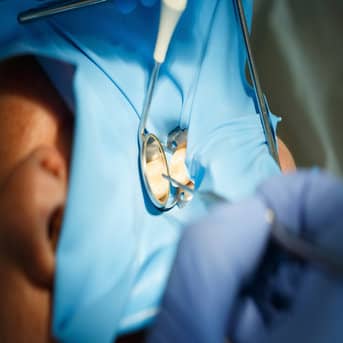
If you are considering making a claim for Medical Negligence understand your rights and the process, find a medical compensation solicitor via solicitors.com
link
The amount of money owing may dictate the route you take to reclaim your money, we recommend that you discuss your situation with a solicitor, or you can call the CAB on 0808 223 1133.
link
To undertake a dental negligence claim you must have sustained an injury or damage, as a result of the dental treatment understand the options available to you.
link

Family Law Solicitors can help you resolve the problems which may arise in the break-up of relationships, including financial issues and matters concerning any children.
link
Will be able to assist on all areas of Motoring Law for Example Drink Driving, Dangerous Driving, Careless Driving, Totting Up, Speeding, Driving Without Insurance motor offences.
link
Find a solicitor that can assist with wills, probate and estate planning in your area.
link