Contesting a Will: Grounds, Time Limits and Procedure.
Wills - Landmark case for contesting a Will -The Court of Appeal has decided in favour of a woman who was not included in her late mothers Will, a ruling that m..link

Inheritance Tax is a tax that may be payable when someone dies if the value of their estate is above the available tax-free allowances. The estate can include property, savings, investments, possessions, business assets and certain gifts made before death.
The standard Inheritance Tax rate is 40% on the part of the estate above the available allowances, subject to exemptions, reliefs and any reduced rate that may apply where enough of the estate is left to charity.
Each person has a standard Inheritance Tax allowance called the nil-rate band. The nil-rate band is currently £325,000.
For example, if an estate is worth £500,000 and no other allowances, exemptions or reliefs apply, Inheritance Tax may be charged at 40% on £175,000. This would produce a tax liability of £70,000.
Transfers between spouses and civil partners are usually exempt from Inheritance Tax. This means that if one spouse or civil partner leaves everything to the other, there may be no Inheritance Tax to pay on the first death.
If the first person to die does not use all of their nil-rate band, the unused portion can usually be transferred to the estate of the surviving spouse or civil partner. This can increase the allowance available on the second death.
The transferable nil-rate band is based on the unused percentage of the first person's allowance, not simply the cash amount that was unused at the time.
For example, if the first spouse or civil partner used none of their nil-rate band because everything passed to the surviving spouse or civil partner, 100% of their unused nil-rate band may be transferred. If the nil-rate band on the second death is £325,000, this may give the survivor's estate an additional £325,000 allowance.
If the first spouse died leaving everything to the surviving spouse, the first spouse's nil-rate band may have been unused. On the second death, the executors may be able to claim 100% of the first spouse's unused nil-rate band.
This could give the second estate a combined nil-rate band of £650,000 before considering any residence nil-rate band, exemptions or reliefs.
If the first person to die used part of their nil-rate band, only the unused percentage can usually be transferred.
For example, if the nil-rate band at the first death was £300,000 and £100,000 was left to non-exempt beneficiaries, one third of the nil-rate band was used. This would leave two-thirds (66.66%) unused. On the second death, that unused percentage would be applied to the nil-rate band in force at the date of the second death.
There may also be an additional allowance called the residence nil-rate band. This can apply where a person leaves a qualifying home to direct descendants, such as children or grandchildren.
The residence nil-rate band is currently £175,000 and is due to remain at that level until 5 April 2030. It can also usually be transferred between spouses and civil partners where unused.
Where both spouses or civil partners leave unused nil-rate band and residence nil-rate band, a qualifying estate may pass on up to £1 million before Inheritance Tax is payable.
This usually consists of two standard nil-rate bands of £325,000 each and two residence nil-rate bands of £175,000 each. The rules are subject to conditions and tapering for larger estates.
The residence nil-rate band can be reduced for larger estates. Where the estate exceeds the taper threshold, the residence nil-rate band is gradually withdrawn.
This can make Inheritance Tax calculations more complicated for estates with higher-value property, pensions, investments or business assets. Specialist advice should be taken where the estate is close to or above the taper threshold.
Where someone has been widowed more than once, it may be possible to claim unused allowances from more than one deceased spouse or civil partner. However, the total transferable nil-rate band is capped.
This means the survivor's estate cannot normally claim more than an additional 100% of the nil-rate band from previous spouses or civil partners, even if more than one of them left unused allowances.
Some gifts made during lifetime can affect the Inheritance Tax calculation. Gifts to individuals may fall outside the estate if the donor survives for 7 years, but gifts made within 7 years of death may need to be considered.
There are also exemptions for certain gifts, such as gifts between spouses or civil partners, annual exemptions, small gifts, normal expenditure out of income and some gifts to charities or political parties.
Some estates may qualify for reliefs, such as business relief or agricultural relief. These reliefs can reduce the taxable value of qualifying assets.
The rules are technical and depend on the type of asset, ownership, use, timing and legislative conditions. Executors should not assume that relief applies without checking the details.
Pensions have historically often sat outside the estate for Inheritance Tax purposes, depending on the scheme and circumstances. However, the rules are changing.
From 6 April 2027, most unused pension funds and pension death benefits are due to be brought within the value of a deceased person's estate for Inheritance Tax purposes. This may affect estate planning and should be reviewed with a regulated financial adviser or specialist tax adviser.
The forms required will depend on the estate value, the date of death, the assets involved, and whether any transferable allowances, reliefs, or exemptions are being claimed.
Where a transferable nil-rate band is being claimed with a full Inheritance Tax account, HMRC form IHT402 may be needed. Executors should check the current HMRC guidance because reporting requirements and forms can change.
Executors may need copies of the will, death certificate, grant of probate, estate accounts, details of lifetime gifts, property valuations, financial statements and documents relating to the estate of the first spouse or civil partner.
If a deed of variation was used after the first death, this may also be relevant. Clear records can make it easier to calculate the available transferable allowance.
Inheritance Tax usually has to be dealt with before or during the probate process. In some cases, tax must be paid before the grant of probate is issued, although instalment options may be available for certain assets such as land or some business interests.
Executors are responsible for reporting the estate correctly and paying any tax due. Interest and penalties may apply if tax is paid late or incorrect information is provided.
HMRC provides a general Inheritance Tax enquiries helpline for questions after someone has died. The telephone number is 0300 123 1072. HMRC can help with forms and responsibilities, but it does not provide personal estate planning advice. :contentReference[oaicite:1]{index=1}
Legal or tax advice may be needed where an estate includes property, business assets, farms, trusts, overseas assets, lifetime gifts, pensions, unmarried partners, disputed beneficiaries, remarriage, large estates or claims for transferable allowances.
A probate solicitor, accountant or specialist tax adviser can advise on Inheritance Tax calculations, forms, nil-rate band transfers, residence nil-rate band claims, reliefs, exemptions, deeds of variation, probate and estate administration.
The standard nil-rate band is currently £325,000. The residence nil-rate band is currently £175,000 and may apply where a qualifying home is left to direct descendants. Unused allowances can usually be transferred between spouses and civil partners.
Some estates can pass up to £1 million free of Inheritance Tax where both spouses or civil partners' nil-rate bands and residence nil-rate bands are available. The rules are subject to conditions, tapering, exemptions and reliefs, so executors should check the position carefully before submitting forms to HMRC.
Solicitors.com is not a firm of solicitors and does not provide legal advice or tax advice. The information on this page is for general guidance only and should not be relied upon as a substitute for advice from a regulated solicitor, accountant or specialist tax adviser. Inheritance Tax rules, HMRC forms and probate requirements can change, and how the law applies will depend on the facts of each case.
If you believe this page contains an error or requires updating, please get in touch with us. We welcome amendments that help keep our legal information accurate and useful.



This is a highly specialised area of the Law and covers both aircraft and their facilities as well as many other areas detailed here.
link
As a charity it is important to understand your legal obligations and rights, a Charity Law solicitor swill be able to help with this, find Charity Law Solicitors from Solicitors.com
link
Solicitors.com - if you are looking to take action under the Human Rights Act, understand your rights and how a solicitor can assist you.
link

We have produced a few guides to help you but would recommend that you speak to a solicitor as all situations are different.
link



If you are looking to buy a property abroad you will need expert legal advice, this section details services provided, and offers guidance on how to find a solicitor for your needs.
linkChanges in probate fees.
From May 2017 probate fees are set to d..
Wills - Landmark case for contesting a Will -The Court of Appeal has decided in favour of a woman who was not included in her late mothers Will, a ruling that m..link
Protecting your on-line memories - In a recent survey over 2,000 people were asked what they think happens to digital images on Facebook if a user passes away,..link
Guide to some of the factors people use when appointing a Solicitor...link
Many people use a trust to reduce inheritance tax, if you put an..
linkGuide to probate showing the different steps to follow..link
If someone has died intestate you may need a probate solicitor to help deal with the estate, this guide helps explain the steps needed...link
Many people use a trust to reduce inheritance tax, if you put an asset into a trust you no longer own it, so depending on when you die your beneficiaries may no..link
Wills - Landmark case for contesting a Will -The Court of Appeal..
linkGuide to Lasting Powers of Attorney.- If you are looking to appoint a solicitor to arrange a Power of Attorney this guide can help you understand how they work...link
The loss of someone close to you can be tragic, and the pain compounded all the more because you have to undertake steps that you would prefer not to do when gr..link
HMRC will have new powers to accelerate tax payment for people using Tax avoidance schemes...link
Solicitors.com are not a firm of solicitors, and any content on the site should not be used in substitute for obtaining Legal advice from a solicitor regulated in the UK, Solicitors.com recommends that you contact a firm of solicitors to discuss your individual legal requirement. Whilst we strive to bring you accurate up to date content, all content on this site is not legal advice and is not guaranteed to be correct. Use of this site does not create a client relationship.

Step by step guide to help you understand the process of Conveyancing and moving.
link.jpg)
We have put together a few guidance notes for your help with Criminal law matters, if you require a solicitors please use the search facility or ask a question.
link
If you are looking for a commercial solicitor understand your options by contacting one of the 100s of commercial law firms on solicitors.com
link
If you are considering making a claim for Medical Negligence understand your rights and the process, find a medical compensation solicitor via solicitors.com
link
The amount of money owing may dictate the route you take to reclaim your money, we recommend that you discuss your situation with a solicitor, or you can call the CAB on 0808 223 1133.
link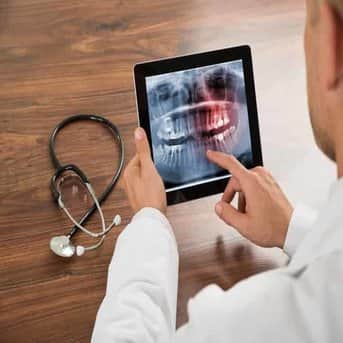
To undertake a dental negligence claim you must have sustained an injury or damage, as a result of the dental treatment understand the options available to you.
link

Family Law Solicitors can help you resolve the problems which may arise in the break-up of relationships, including financial issues and matters concerning any children.
link
Will be able to assist on all areas of Motoring Law for Example Drink Driving, Dangerous Driving, Careless Driving, Totting Up, Speeding, Driving Without Insurance motor offences.
link
Find a solicitor that can assist with wills, probate and estate planning in your area.
link