Bail
What is Bail in the UK - If you have been charged with a crime you can be released on bail from the police station, which means you will be able to go home but..link

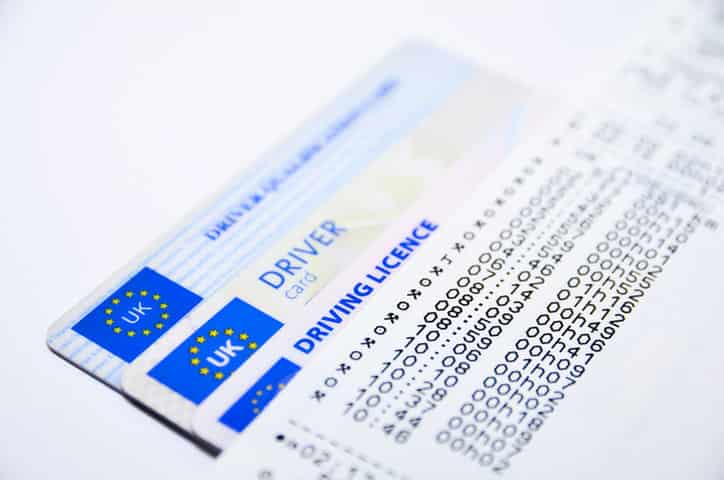
If a driver receives 12 or more penalty points within 3 years, they may face a driving ban under the totting up rules. This is known as a totting-up disqualification and usually results in a minimum disqualification period of 6 months.
A driving ban can have serious consequences, including loss of employment, difficulty caring for family members, financial pressure and problems attending medical appointments. In some cases, the court may decide not to impose the usual ban or reduce its length if the driver can prove exceptional hardship.
Totting up applies when penalty points accumulate on a driving licence over time. Points can be given for many motoring offences, including speeding, using a mobile phone while driving, careless driving, driving without insurance, failing to comply with traffic signs and other road traffic offences.
For totting-up purposes, the court looks at penalty points for offences committed within the relevant 33-year period. Some endorsements stay on a driving record for longer, but the period used for totting up is different from the period an endorsement remains visible on the licence record.
Where a driver accumulates 12 or more penalty points, the court must usually impose a minimum disqualification period. The usual minimum ban is 6 months.
The minimum period may be longer if the driver has had previous disqualifications. The court will consider the driver's record and the statutory rules before deciding the length of any ban.
Different rules apply to new drivers. If a driver receives 6 or more penalty points within 2 years of passing their first driving test, their licence will usually be revoked by the DVLA.
This is not the same as a court-imposed totting-up ban. A revoked new driver licence means the driver will usually need to apply for a provisional licence again and pass both the theory and practical driving tests before driving unsupervised.
A driver who reaches 12 or more points may be able to argue that a driving ban would cause exceptional hardship. This is not automatic. The court will expect clear evidence that the hardship would go beyond the normal inconvenience of losing a licence.
Loss of a job, financial difficulty or inconvenience may not be enough on its own. The court may be more likely to consider hardship exceptional where the ban would seriously affect others, such as employees, vulnerable family members, dependants, patients, clients, or people who rely on the driver for care.
Exceptional hardship arguments may involve the risk of losing employment, the effect on a business or its employees, caring responsibilities, medical needs, lack of alternative transport, the impact on vulnerable dependants, or the effect on others who rely on the driver.
Each case depends on its evidence. The driver should be prepared to provide documents such as employment letters, medical evidence, financial information, care records, business accounts, staff details, travel evidence and witness statements where relevant.
Some cases involve issues such as insurance mistakes, administrative errors, postal problems, incorrect documents, or misunderstandings of legal requirements. Depending on the facts, these may be relevant to the offence, mitigation, special reasons or exceptional hardship.
Legal advice should be sought promptly because the correct argument will depend on the charge, the evidence,e and the procedure. Exceptional hardship is not the same as a defence to the offence.
If you are facing a totting-up ban, you should gather evidence as early as possible. The court will need specific information about why a ban would cause exceptional hardship and who would be affected.
A solicitor can help prepare the argument, identify the right evidence and present the case clearly. If an exceptional hardship argument succeeds, the same facts cannot usually be relied on again in another totting up case within the next 3 years.
To find a solicitor who may be able to help with penalty points, totting up, exceptional hardship or a driving ban, use the search facility, select Motoring Law and enter your location.



This is a highly specialised area of the Law and covers both aircraft and their facilities as well as many other areas detailed here.
link
As a charity it is important to understand your legal obligations and rights, a Charity Law solicitor swill be able to help with this, find Charity Law Solicitors from Solicitors.com
link
Solicitors.com - if you are looking to take action under the Human Rights Act, understand your rights and how a solicitor can assist you.
link

We have produced a few guides to help you but would recommend that you speak to a solicitor as all situations are different.
link



If you are looking to buy a property abroad you will need expert legal advice, this section details services provided, and offers guidance on how to find a solicitor for your needs.
linkWhat is Double Jeopardy? and is it still Law in the UK?..
linkWhat is Bail in the UK - If you have been charged with a crime you can be released on bail from the police station, which means you will be able to go home but..link
Is it right that a child that is groomed online can face a criminal record...link
If the crime is ongoing call 999, you should not put yours or anyone else’s safety at risk by taking action yourself...link
Over 2000 section 60 notices have been issued in London last year..
linkGuide to some of the factors people use when appointing a Solicitor...link
Unfortunately, not everyone is respectful in life, most of the time we just move on and keep our opinion to ourselves, but when that comes to where we live you..link
Criminals to face paying court charges.
- In a move which, is a step in the right direction, the Government has announced that criminals will face having to pa..link
Police Chiefs are calling for a change in the 'stop and search' l..
linkLaw targeting charity fundraising - Vulnerable people are to be protected from fundraising activities by charities, the chancellor has announced in the budget...link
Police Reforms - With the government recently announcing that they will be reviewing the stop and search rules we take a look at the rules that apply...link
Family law, Changes to help victims of controlling behaviour.
The Home Secretary had announced new laws to help victims of psychological and emotional abuse b..link
Solicitors.com are not a firm of solicitors, and any content on the site should not be used in substitute for obtaining Legal advice from a solicitor regulated in the UK, Solicitors.com recommends that you contact a firm of solicitors to discuss your individual legal requirement. Whilst we strive to bring you accurate up to date content, all content on this site is not legal advice and is not guaranteed to be correct. Use of this site does not create a client relationship.

Step by step guide to help you understand the process of Conveyancing and moving.
link.jpg)
We have put together a few guidance notes for your help with Criminal law matters, if you require a solicitors please use the search facility or ask a question.
link
If you are looking for a commercial solicitor understand your options by contacting one of the 100s of commercial law firms on solicitors.com
link
If you are considering making a claim for Medical Negligence understand your rights and the process, find a medical compensation solicitor via solicitors.com
link
The amount of money owing may dictate the route you take to reclaim your money, we recommend that you discuss your situation with a solicitor, or you can call the CAB on 0808 223 1133.
link
To undertake a dental negligence claim you must have sustained an injury or damage, as a result of the dental treatment understand the options available to you.
link

Family Law Solicitors can help you resolve the problems which may arise in the break-up of relationships, including financial issues and matters concerning any children.
link
Will be able to assist on all areas of Motoring Law for Example Drink Driving, Dangerous Driving, Careless Driving, Totting Up, Speeding, Driving Without Insurance motor offences.
link
Find a solicitor that can assist with wills, probate and estate planning in your area.
link